OpenDSO Overview
Overview
The Open Distributed Systems Operations (OpenDSO™) Platform developed by Open Energy Solutions Inc. (OES) is a near real-time operational technology enablement platform enabling interoperability, edge intelligence and application management services for operating the electrical grid. Built on best-of- breed open-source technology and leveraging industry standards, the scope of the platform and the capabilities it supports can be classified in three major patterns or thematic areas as well as supporting integrations with enterprise applications to enable end to end use cases. The positioning of the platform in the context of a layered architecture for grid-edge IoT is illustrated and explained below:
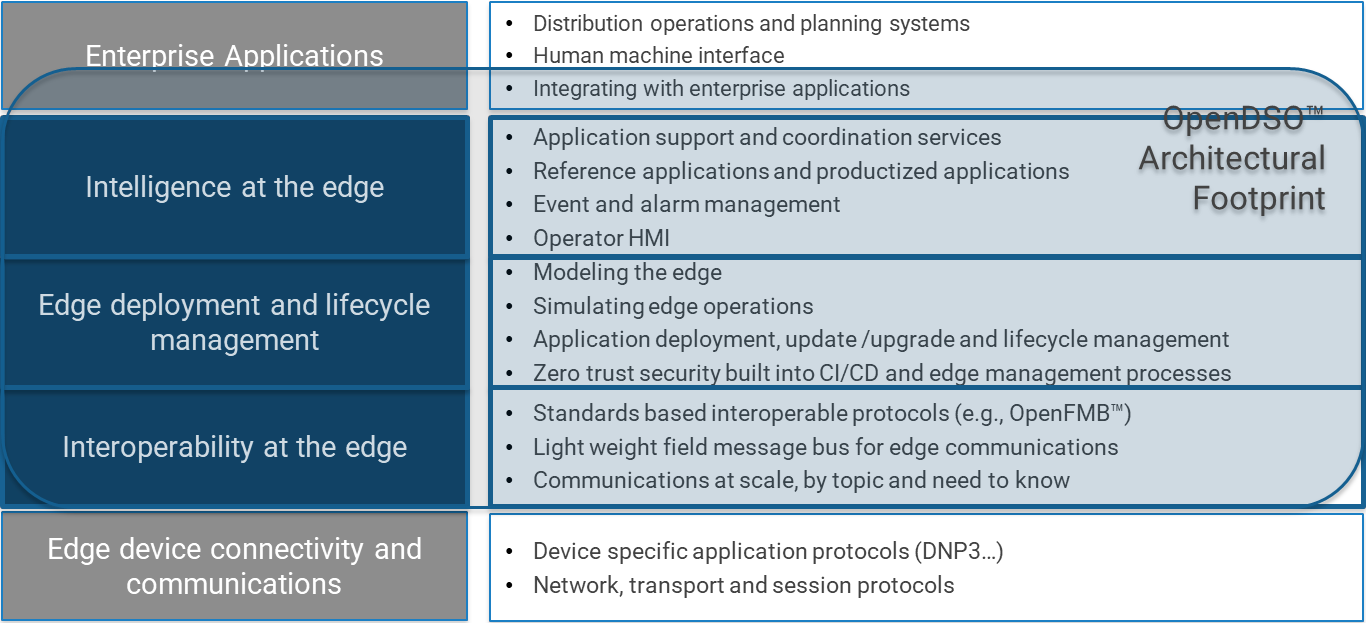
Figure 1 : OpenDSO Architectural Footprint for Grid-Edge IoT
Edge device connectivity and communications
The domain of edge devices typically consists of the edge devices, communications with the edge devices as well as, the application protocols supported by edge devices. This domain also includes connectivity, compute and devices that sit at the edge (such as gateways). OpenDSO™ is complementary to existing devices and solutions in this space.
Interoperability pattern at the edge
The challenge of interoperability can be classified into three major areas:
- Interoperability with legacy grid protocols: Using UCAIUG’s Open Field Message Bus (OpenFMB™) standard, OpenDSO enables interoperability with legacy grid devices and associated protocols through a suite of adapters and gateways that can run on low-cost communication nodes co-located with grid assets.
- Communications and interoperability between edge devices: Using a light-weight publish and subscribe bus along with OpenFMB™ adapters, edge compute devices can communicate with edge grid devices and with each other to enable distributed intelligence.
- Communications at scale: The use of publish and subscribe message bus at the edge is also the foundation of communications at scale. Communications between devices are based on published topics and subscribers only listen to topics of interest and based on their security profile.
Edge device and lifecycle management
The architectural domain of device and lifecycle management comprises the capabilities that OpenDSO™ provides for the secure, automated deployment and of containerized applications and microservices to edge compute devices, management of containers and clusters that they are deployed on, as well as the management of the lifecycle of such applications across initial deployment and configuration, update/upgrades and removal/retirement. The platform also facilitates an open approach toward promoting a healthy ecosystem of edge applications that utilities can choose from. For the same business use case, utilities can choose to deploy an application developed by OES, a third-party application developer, an OEM or internally.
Intelligence at the edge
OpenDSO provides a distributed intelligence framework encompassing concepts of segment management and laminar coordination at various levels of the connected grid, thus enabling utilities to deploy grid operations applications at the edge and benefit from real time measurements, monitoring, response and control. The platform complements a grid operator’s existing control systems, allowing architectural patterns from centralized command and control using data collected by the platform, to fully distributed intelligence at the edge.
Enterprise applications
OpenDSO™ is not intended to replace a utility’s existing enterprise systems used for distribution operations. Rather it integrates and complements existing control center applications by faciliating edge intelligence, integration and connectivity though the underlying pub-sub message bus. The overall intent of the platform is to enable the ability to execute and operate at the edge without the limitations of centralized architecture and processes to accommodate the volume, variability and near real-time control requirements for managing the expected propagation of distributed energy resources (DER) on the grid.